Women's Suffrage
.jpg)
The women’s suffrage campaign in the United States culminated in the Nineteenth Amendment to the Constitution, ratified on August 18, 1920, which granted women permanent suffrage (the right to vote), in all states. Suffragists, male or female, supported equal suffrage. Women’s suffrage gained support during World War I. Due to shortage of manpower domestically, women worked in nontraditional jobs and demonstrated willingness and ability to move beyond prescribed gender roles. After decades of struggle, the Nineteenth Amendment to the Constitution was ratified in 1920. From the beginning, the organized women’s movement had male supporters.
1919 Red Scare
The 1919 Red Scare in the United States was a period marked by fear of communists, socialists, anarchists, and radicals; recent immigrants were perceived as the enemy. Intense patriotism and nativism had a stronghold during and following World War I. Suspicion was strong that a Bolshevik revolt, similar to the Russian Revolution of 1917, was being planned on native soil. Massive labor strikes and anarchist bombings provoked fears that democracy was at threat. Overreaction and intolerance during the 1919 Red Scare resulted in major violations of civil liberties.
.jpg)


Andrew Palmer, a supporter of worker's rights and women's suffrage, became one of the most involved anti-communist politicians. After a bombing on Wall Street in front of J.P. Morgan's office, Palmer was convinced there was a plot to overthrow government in the United States. Even the most innocent statement against capitalism, the government, or the country could lead to arrest and incarceration. Moreover, arrestees were often denied counsel and contact with the outside world, beaten, and held in inhumane conditions. If the national press is any indicator of the predominant mood of the country, then the efforts of the Justice Department was overwhelmingly supported by the masses because the raids, deportations, and arrests were all championed on the front page of most every paper. All told, thousands of innocent people were jailed or deported, and many more were arrested or questioned. On January 2, 1920 alone over 4,000 alleged radicals were arrested in thirty-three cities.
The Sacco-Vanzetti Trial
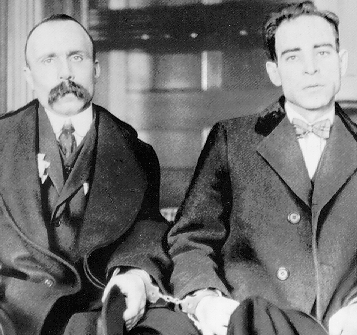
As a result of the Red Scare, these Italian-Americans were convicted of murdering two men after a 1920 bank robbery in Massachusetts. Although the men had friends to testify that they were at work during the time of the shootings, the court still found them guilty due to their being foreign, atheists and anarchists. Even though there was not nearly enough evidence to prove the men guilty, they were executed on August 23, 1927. Whether or not they were guilty is a topic still debated today.
Gangsters
Breaking the law during the 1920s had become an exciting, profitable lifestyle for certain individuals. When acts such as the Volstead Act were passed, speakeasies rose up everywhere. There were over 200,000 at one point! For some, it as a game to see how they could break the law. For others, such as Al Capone and John Dilinger, it was a way of life. Gangsters of the 1920s wore high fashion suits and expensive jewelry, and were known most commonly for bootlegging. Americans at the time weren't too upset about the rise of gangsters in society; actually, some people liked or even looked up to them.


Bonnie & Clyde

Al Capone
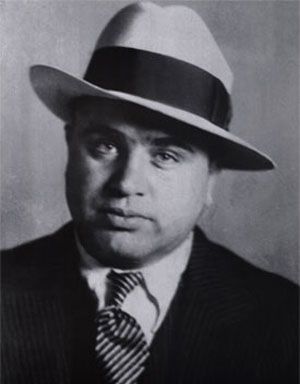
Al Capone is America's best known gangster and the single greatest symbol of the collapse of law and order in the United States during the 1920s Prohibition era. Capone had a leading role in the illegal activities that lent Chicago its reputation as a lawless city. Capone was the poster-boy of the media and he loved the attention. He became part of the notorious Five Points gang in Manhattan and worked in gangster Frankie Yale's Brooklyn dive, the Harvard Inn, as a bouncer and bartender. While working at the Inn, Capone received his infamous facial scars and the resulting nickname "Scarface" when he insulted a patron and was attacked by her brother. On December 4, 1918, Mae Coughlin gave birth to their son, Albert "Sonny" Francis. Capone and Mae married that year on December 30.
John Dillinger


One of America's most well-known gangsters, and the notorious Public Enemy #1. He was an American gangster and bank-robber in the United States. He was charged with the murder of an East Chicago police officer, but never convicted. During his bank heists, a dozen victims—prison officers, police, federal agents, gangsters and civilians—were killed. His gang robbed two dozen banks and four police stations. Dillinger escaped from jail twice. Media reports were spiced with exaggerated accounts of his bravado and daring. The public demanded federal action and the FBI was developed as a weapon against organized crime to catch him. After evading police in four states for almost a year, Dillinger was wounded and returned to his father's home to recover. He returned to Chicago in July 1934 and met his end at the hands of police and federal agents who were informed of his whereabouts by Ana Cumpanas. On July 22, the police closed in on the Biograph Theatre. Federal agents tried to arrest him as he left the theater. He pulled a weapon and attempted to flee but was shot three times and killed. He accumulated more than $300,000 of stolen funds with his gang.
Bonnie & Clyde
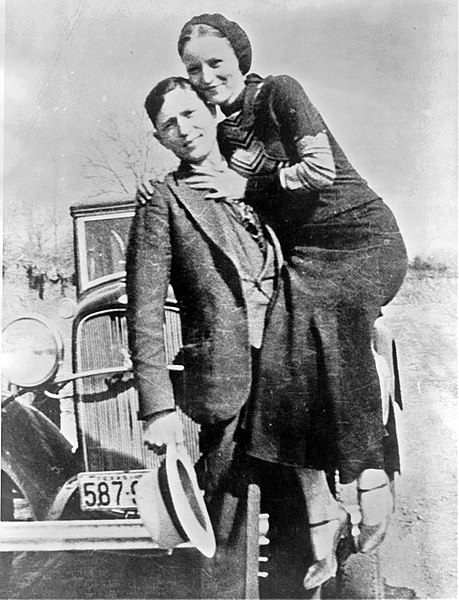
Bonnie Parker and Clyde Barrow were well-known outlaws living during the "public enemy era." Although he stole from several banks throughout his "career," Barrow actually preferred robbing small stores and rural gas stations. The media often depicted them as savage and bloodthirsty murderers, when really it was taken much out of proportion to their true identity. Historian Jeff Guin has said, "John Dillinger had matinee-idol good looks and Pretty Boy Floyd had the best possible nickname, but the Joplin photos introduced new criminal superstars with the most titillating trademark of all—illicit sex. Clyde Barrow and Bonnie Parker were young and unmarried. They undoubtedly slept together—after all, the girl smoked cigars.... Without Bonnie, the media outside Texas might have dismissed Clyde as a gun-toting punk, if it ever considered him at all. With her sassy photographs, Bonnie supplied the sex-appeal, the oomph, that allowed the two of them to transcend the small-scale thefts and needless killings that actually comprised their criminal careers."
Crime Labs
 The first crime labs were implemented in the United States in the 1920s. The LAPD opened its first crime lab in 1923. These labs were staffed by chemists and other assistants, with various scientists and technicians hired by the day as needed. Early work focused on things like ballistics, photography, hair samples, blood work, clothing fibers, paint chips, and tire treads.
Scopes Monkey Trials
The Scopes' Monkey Trial of 1925 sparked nationwide controversy between Fundamentalists and evolutionists concerning public school curricula. Scopes' Monkey Trial dialectic concerned Darwin’s theory of evolution which challenged religious creationism fundamentals. Fundamentalists interpret the Bible literally and view evolutionary theory as a serious threat to their religious truths. he American Civil Liberties Union (ACLU) construed anti-evolution laws as unconstitutional under the First Amendment to the Constitution, which mandates separation between church and state in public education. The 24-year-old teacher, John Scopes, had agreed to be indicted for teaching evolution.


The lawyers in this case were the thought to be the best minds of their day; former Secretary of State William Jennings Bryan, defending the prosecuting Scopes, and Clarence Darrow, defending Scopes. In the trial, Darrow was able to trap Bryan while he was on the stand and make him sound foolish as he tried to say that everything in the Bible was literal. Bryan won the case, and teaching evolution in school became legal.
Crime Labs

Scopes Monkey Trials
The Scopes' Monkey Trial of 1925 sparked nationwide controversy between Fundamentalists and evolutionists concerning public school curricula. Scopes' Monkey Trial dialectic concerned Darwin’s theory of evolution which challenged religious creationism fundamentals. Fundamentalists interpret the Bible literally and view evolutionary theory as a serious threat to their religious truths. he American Civil Liberties Union (ACLU) construed anti-evolution laws as unconstitutional under the First Amendment to the Constitution, which mandates separation between church and state in public education. The 24-year-old teacher, John Scopes, had agreed to be indicted for teaching evolution.

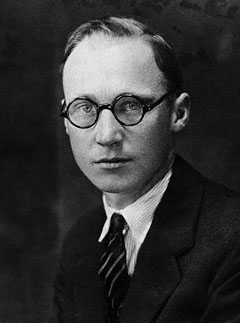

William J. Bryan John T. Scopes Clarence Darrow
