
The new music and dances were fast paced and energetic, like the optimistic 1920's themselves. They were an escape from the horror of war, and an opportunity to release pent up emotions created by the restricted lifestyles forced on the public by the war effort. Dances like the Tango and Charleston received a huge boost in popularity when featured in movies by stars like Rudolph Valentino and Joan Crawford. This time was known as the swing era, and introduced new styles of dancing with individuals swaying and hugging in rhythm with music, since women were no longer restricted by corsets. Flappers brought on a new style of clothing, and a new attitude. They would go out at night and dance with friends in outfits that many deemed as provocative. Parents would have their children learn ballet at a school if they could afford it, as dancing had become an activity for people of all ages. Often times, dance marathons would be held in cities where (very few) people died of dehydration. Other popular dances of the time were the Black Bottom, the Tango, the Animal Dances, the Lindy Hop, the Shimmy, the Charleston and the Fox-Trot.
The Black Bottom

The Black Bottom, like many other dances, originated in the African-American community. It started in the South in 1919 with a song of that name and was picked up in shows in Harlem where it became more popular in its time than the Charleston.
The Tango


As if the Waltz wasn’t bad enough, allowing the man and the woman to move together in a close embrace, the Tango seemed even more erotic. In the Tango, the couple actually maintained direct eye contact and the moves were extremely sensual.
The Animal Dances
The Bunny Hug- The Bunny Hug was particularly scandalous. It was usually danced to slower music and featured grinding moves like the ones seen today on the dance floor. Even the faster dances involved close contact and so were considered indecent by most. Some clubs banned them. Some people were fined for dancing so erotically.

The Turkey Trot- This dance was actually denounced by the Vatican, however that just increased its popularity.

The Hose Trot- The Horse trot was a 'running walk' dance and was somewhat different than the Turkey Trot, Grizzly Bear and Bunny Hug of the time. Most of these Popular Ragtime dances were based on the One Step. It was popular in the early 1910s but was losing favor with the public around 1914. Mainly due to the high kicking involved as the ladies garments of the time made it difficult to do as well as many seeing the dance as vulgar. The dance involved raising the foot very high with a jumpy style.

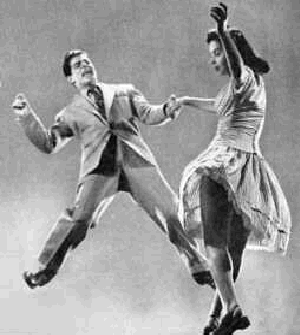
(Below: The Kangaroo Hop, Grizzly Bear, Lindy Hop, The Shimmy.



The Charleston
This dance can be danced to solo, or with a partner. Developed in African-American communities in the United States, the Charleston became a popular dance craze in the wider international community during the 1920s. Despite its origins, the Charleston is most frequently associated with white flappers and the speakeasy.
The Fox-Trot
Its inventor was Harry Fox, a vaudeville dancer and comedian who introduced it in New York’s vaudeville theaters with his performing group.
